ILLINOIS POLLUTION CONTROL BOARD
October 16, 1997
PEOPLE OF THE STATE OF ILLINOIS,
Complainant,
v.
AMERICAN WASTE PROCESSING, LTD.,
an Illinois corporation,
Respondent.
)
)
)
)
)
)
)
)
)
)
PCB 98-37
(Enforcement - RCRA)
ORDER OF THE BOARD (by R.C. Flemal):
This matter is before the Board on a motion to dismiss for lack of subject matter
jurisdiction filed by American Waste Processing, Ltd. (American Waste Processing) on
September 23, 1997. American Waste Processing alleges that the complaint, filed on
September 8, 1997 by the Illinois Attorney General (Attorney General), does not comply with
Section 31 of the Illinois Environmental Protection Act (Act) (415 ILCS 5/31 (1996)) as
amended effective August 1, 1996. The Attorney General filed a response to the motion on
September 30, 1997. For the foregoing reasons, the Board denies American Waste
Processing’s motion to dismiss and orders this case to hearing on the merits of the allegations.
FACTS
The instant matter is the second of two relevant complaints filed with the Board against
American Waste Processing. The first was filed on June 26, 1996. The Board docketed that
action as People v. American Waste Processing, Ltd., PCB 96-264.
On January 23, 1997 the Board granted American Waste Processing’s motion to
dismiss the PCB 96-264 complaint. The Board found it lacked subject matter jurisdiction
because the Illinois Environmental Protection Agency (Agency) had failed to serve written
notice of all the alleged violations to American Waste Processing prior to the filing of the
formal complaint, as required pursuant to Section 31(d) of the Act (415 ILCS 5/31(d)(1)
(1994)). The Board found that “a motion to dismiss for failure to comply with Section 31(d)
is not an adjudication on the merits of the complaint” (People v. American Waste Processing,
Ltd. (January 23, 1997), PCB 96-264, slip op. at 4) and dismissed the complaint without
prejudice. The Board also observed that the “complainant is free to, at any time, serve
American Waste Processing with the required 31(d) notice and then proceed with the filing of
another formal complaint with the Board.” People v. American Waste Processing, Ltd.
(January 23, 1997), PCB 96-264, slip op. at 4.
2
On
March 20, 1997 the Board, in denying the Attorney General’s motion to reconsider,
issued an order which found that “complainant served notice on American Waste Processing on
February 14, 1997,” and that “consistent with the remainder of the Board’s order, complainant
may also file a new complaint.” People v. American Waste Processing, Ltd. (March 20, 1997),
PCB 96-264, slip op. at 2.
On February 14, 1997 an Agency attorney sent a letter to American Waste Processing
noticing the same violations that had been alleged in the PCB 96-264 complaint. Mot. To
Dismiss Exh. A. The letter was sent in response to the Board’s January 23, 1997 order to
comply with the former Section 31(d) (415 ILCS 5/31(d) (1994)) notice requirements. The
notice informed American Waste Processing of the allegations and provided for an opportunity
to meet with Agency officials to resolve the conflict prior to filing a formal complaint. Mot.
To Dismiss Exh. A.
On April 1, 1997 a meeting was held at the offices of the Attorney General involving
representatives from American Waste Processing, the Agency, and the Attorney General.
Mot. To Dismiss Exh. B. American Waste Processing objected to the meeting and asserted to
all parties present that the “conference” was invalid as a pre-enforcement complaint dispute
resolution conference because Section 31(a)(4) (415 ILCS 5/31(a)(4)(1996)) bars the Attorney
General from participating at such meeting until the requirements of Sections 31(a)(1), (a)(2),
(a)(4), and (a)(7), and 31(b) and (c)(1) (415 ILCS 5/31(a)(1), (a)(2), (a)(4), (a)(7), 31(b),
31(c)(1) (1996)) are met. Mot. To Dismiss at 2, 3.
On September 8, 1997 the Attorney General, on its own motion, and at the request of
the Agency, filed the instant complaint against American Waste Processing pursuant to Section
31 of the Act (415 ILCS 5/31 (1996)). This September 8, 1997 complaint, which alleges the
same violations as the complaint filed on June 26, 1996, is at issue today.
1
BACKGROUND
Section 31 of the Act (415 ILCS 5/31 (1996)) sets forth procedural and notice requirements applicable to
the environmental enforcement process. Section 31 provides the person alleged to be violating the Act with notice
of such allegations and an opportunity to meet with the State in an effort to come to an agreement before formal
initiation of prosecution.
Prior to August 1, 1996, Section 31(d) required that the Agency issue and serve a notice of violation letter
on a respondent prior to the filing of a complaint for enforcement. See 415 ILCS 5/31(d) (1994). By legislative
amendment effective August 1, 1996, Section 31 was modified. See 415 ILCS 5/31 (1996). Instead of requiring
1
The complaint alleges that American Waste Processing, operator of a hazardous waste
transfer station at 2010 West Madison, Maywood, Cook County, Illinois, violated various
Sections of the Act. Those sections are specially as follows: Sections 12(a), 12(d) and
21(f)(2) of the Act (415 ILCS 5/12(a), 12(d), 21(f)(2)), and 35 Ill. Adm. Code 703.154(b),
725.191(a), 725.193(d)(4), 725.212(c)(4), 725.213, 725.215, 725.242(a)(1), 725.242(a)(2),
725.242(a)(3), 725.242(a)(4), 725.242(b), 725.242(c), 725.243(a)(2), 725.243(a)(3)(B),
725.244, 725.245(a)(2), 725.247(a), 725.247(b), 725.297(c).
3
the old Section 31(d) letter as a precondition to the filing of the complaint, revised Section 31 sets forth a specific
time-driven procedure that the Agency must follow when it discovers a potential violation. Compliance with the
new procedures outlined in Section 31 is a precondition to the Agency’s referral of a case to the Attorney General
for the initiation of a formal enforcement action. See 415 ILCS 5/31(b) (1996).
In People v. Heuermann (September 18, 1997), PCB 97-92, the Board determined that
the new Section 31(a) and (b) should be applied prospectively to cases referred to the Attorney
General after August 1, 1996, the effective date of the amendments to Section 31. In reaching
this conclusion, the Board found that to apply the provisions of new Section 31(a) and (b) to
cases that were referred prior to August 1, 1996, would improperly impose new requirements
and duties on transactions already past, that being the referral of a case to the Attorney General
for enforcement.
ARGUMENTS
American Waste Processing argues that the revised Section 31 notice, in particular
Sections 31(a)(1), 31(a)(2), and 31(a)(4), was required in this case. Because the Attorney
General and the Agency did not follow those requirements, American Waste Processing argues
that the Board does not have jurisdiction to hear this matter. Mot. To Dismiss at 1. American
Waste Processing further argues that the February 14, 1997 notice is ineffective because
former Section 31(d) had been amended and was no longer in effect when that notice was sent.
Finally, American Waste Processing argues that the February 14, 1997 Agency letter is
deficient for two additional reasons. First, the revised Section 31(d) refers only to “[t]hird-
[p]arty [c]omplaints” and not to the Agency. Second, the revised Section 31(a)(1)(D) ((415
ILCS 5/31(a)(1)(D) (1996)) only pertains to violations which occurred within 180 days. Mot.
To Dismiss at 4.
The Attorney General, on behalf of the Agency, states that the Agency notified
American Waste Processing of the apparent violations in accordance with Section 31(d) (415
ILCS 5/31(d) (1996)) on several occasions, beginning in 1983 through 1994. Resp. at 1-2.
However, the Board notes that although the Attorney General has the authority to bring this
action pursuant to the new Section 31(d) (415 ILCS 5/31(d)(1996)), the Agency could not
have given notice to American Waste Processing pursuant to the revised Section 31(d) because
that Section of the Act was not effective until August 1, 1996. Nevertheless, the Attorney
General claims that American Waste Processing was again properly notified of the apparent
violations on February 14, 1997, and two subsequent meetings with American Waste
Processing were held. Resp. at 1-2.
The Attorney General also argues, citing Heuermann, that because the revised Section
31(a) does not prohibit it from proceeding on its own initiative, and the instant complaint was
brought by the Attorney General, on its own motion and at the request of the Agency, its
authority to prosecute is not limited or bound by Section 31(a) requirements. Resp. at 3-4.
CONCLUSION
4
The Agency originally referred this matter to the Attorney General prior to August 1,
1996. In fact, the original referral was made to the Attorney General on February 5, 1993. Based
on Heuermann, new Section 31(a) and (b) do not apply to the pending matter. In Heuermann the
Board found the
amendments did not apply where the referral by the Agency was given to the
Attorney General prior to August 1, 1996.
People v. Heuermann (September 18, 1997), PCB 97-92.
Accordingly, the Board rejects American Waste Processings’ argument that this matter should be
dismissed because the Agency failed to comply with new Section 31(a) and (b) prior to the
referral or filing of the complaint.
Moreover, the Board specifically stated in its January 23, 1997 order in
People v. American Waste
Processing, Ltd. (January 23, 1997), PCB 96-264,
that the Attorney General could file another
complaint if Section 31 notice was complete. In that order, the Board required that the former Section 31(d) notice
be served upon American Waste Processing.
On February 14, 1997 the Agency sent American Waste
Processing a notice of the alleged violation as required under the former Section 31 (415 ILCS
5/31 (1994)). On March 20, 1997 the Board found that statutorily-required Section 31(d)
notice was provided and the Attorney General was free to file a new complaint. Accordingly,
the Board will not dismiss the instant complaint.
The Board hereby denies respondent’s motion to dismiss and orders this proceeding to
hearing on the merits of the allegations contained in the Attorney General’s September 8, 1997
complaint.
IT IS SO ORDERED.
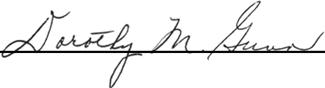
I, Dorothy M. Gunn, Clerk of the Illinois Pollution Control Board, hereby certify that
the above order was adopted on the16th day of October, 1997 by a vote of 7-0.
Dorothy M. Gunn, Clerk
Illinois Pollution Control Board