ILLINOIS POLLUTION CONTROL BOARD
February 20, 2003
IN THE MATTER OF: )
)
PROPOSED NEW AND UPDATED RULES )
FOR MEASUREMENT AND NUMERICAL )
SOUND EMISSIONS STANDARDS ) R03-9
AMENDMENTS TO 35 ILL. ADM. ) (Rulemaking - Noise)
CODE 901 and 910 )
Proposed Rule. Proposal for Public Comment.
ORDER OF THE BOARD (by M.E. Tristano, G.T. Girard, T. E. Johnson):
The Board opened this rulemaking to propose updated regulations governing noise found in 35 Ill. Adm. Code Subtitle H, pursuant to Sections 27 and 28 of the Illinois Environmental Protection Act, (415 ILCS 5/27-5/28 (2002) and 35 Ill. Adm. Code Part 102 Subpart B. Many of the sound measurement definitions and techniques in the Board’s current rules do not reflect present scientific standards. The instant rulemaking is closely associated with recently opened docket Noise Rule Update Amendments to 35 Ill. Adm. Code 900 and 903, R03-08 (R03-8) that defines acoustical terms, pollution sources and sound measurement procedures. R03-8 is also based on updated science, including pertinent American National Standards Institute updates from 1998-2001, and other current scientific publications. Noise Rule Update Amendments to 35 Ill. Adm. Code 900 and 903, R03-08 (Dec. 19, 2003) slip op at 2.
The instant proposal revises outdated numerical sound emission standards for property line noise sources found at 35 Ill. Adm. Code Parts 901. In addition, the proposal adds Part 910 to the Board’s rules that incorporates noise measurement techniques currently contained only in Illinois Environmental Protection Agency (Agency) rules at 35 Ill. Adm. Code 951.
BACKGROUND
The Board’s noise rules have not been updated since 1983 and 1987. In 1990, the Department of Energy and Natural Resource 1 (DENR) contracted Dr. Paul Schomer of the University of Illinois to examine the adequacy of Illinois noise regulations, and, particularly whether the existing rules were adequate to regulate discontinuous noise. Dr. Schomer’s report, “Impulse Noise Study”, (ILENR/RE-EA-90-16, printed November 1990, Springfield, IL) suggested some adjustments in the Board’s noise regulations. In 1991, DENR contracted for an additional report by Dr. Schomer, entitled, “Proposed Revisions to Property Line Noise Source Measurement Procedures”, (ILENR/RE-EA-91/10, printed June 1991, Springfield, IL), describing and developing a systematic set of procedures for noise measurements.
During the summer of 1991, the Board prepared a proposal that attempted to translate the Schomer reports into regulatory language (Amendments to 35 Ill. Adm. Code Subtitle H Noise-Pertaining to Definitions, Measurement Procedures, and Sound Emission Standards Relating to Certain Noise Sources, R91-25 (Oct. 24, 1991)). An inquiry hearing based on the document was held on November 25, 1991, in Chicago, Illinois, in which testimony was presented. The Board’s proposal was based on revising the noise measurement procedures at Section 900.103(b) and the impulsive sound standards at Section 901.104. In addition, the Board proposed incorporating Agency noise measurement procedures found at 35 Ill. Adm. Code 951 into Board regulations at 35 Ill. Adm. Code Part 910, by modifying the Part 951 language to incorporate the recommendations contained within the Schomer reports. In 1992, the Board closed the R91-25 docket before proceeding to first notice with proposed changes to the Board’s noise rules.
The need to update the Board’s noise rules to conform to current scientific procedures has become more apparent during the past ten years. The Board has identified necessary improvements in several areas. In the instant rulemaking, the Board proposes changes in Parts 901 and 910. In Part 901, the Board proposes to replace the references to the Standard Land Use Coding System (SLUCM) codes with the more appropriate Land-Use Based Classification System. New rules in Part 910 are proposed to incorporate Agency noise measurement procedures found at 35 Ill. Adm. Code 951. In the companion rulemaking, R03-08, which went to first notice on December 19, 2002, the Board proposed changes in Parts 900 and 903 of the noise rules. In Part 900, definitions and technical references have been updated. Part 903 needs to be repealed because the Illinois legislature has removed the authority for the rules.
DISCUSSION
The Board will explain each section of the rule in the following discussion.
35 Ill. Adm. Code 910: Measurement Procedures for the Enforcement of 35 Ill. Adm. Code 900 & 901
The proposed new Part 910 sets forth the measurement procedures for enforcing the Board’s noise standards in Parts 900 and 901. These procedures are essentially based upon the Agency’s noise measurement protocols at 35 Ill. Adm. Code 951. As noted above, the Board has made a number of substantive changes to the Agency’s measurement protocols to reflect the recommendations of the DENR’s noise reports. A brief description of the proposed procedures is provided below.
Section 910.100 General
This Section sets forth the scope of the proposed noise measurement procedures and techniques. The Board has deleted references to “Agency personnel”, since the measurement procedures are applicable to any person conducting noise measurements to demonstrate compliance with Parts 900 and 901.
Section 910.101 Personnel Qualification
The Board decided not to incorporate the Agency’s personnel qualification requirements in the instant proposal since they are specific to Agency personnel, and also because the requirements are not based on any State approved licensing or certification.
Section 910.102 Instrumentation
This section sets forth the requirements for sound measuring equipment, sound indicating devices such as magnetic tape recorder or graphic level recorder, and weather measuring instruments. These requirements are the same as that in Part 951, except for the updated references to the ANSI (American National Standards Institute), and the International Electrotechnical Commission (IEC) standards. See changes at Section 910.102(a).
Section 910.103 Definitions
The Board has moved all pertinent definitions found in the Agency’s regulations to 35 Ill. Adm. Code 900.103, which contains the definitions applicable to the Board’s noise regulations.
Section 910.104 Measurement Techniques for 35 Ill. Adm. Code 900
This section clarifies that while sound pressure level measurements are not required to establish a violation of the Board’s nuisance noise standard at 35 Ill. Adm. Code 900.102, such measurements may be used as corroborating evidence. In this regard, the proposal requires a person conducting sound measurements to comply with the instructions of the sound measurement equipment manufacturer. Further, Section 910.104 sets forth that the measurement techniques proposed at Section 910.105 may be used as guidance. While the proposed approach deviates from the detailed sound measurement requirements specified in Part 951, the Board believes that the proposed approach is consistent with the Board’s precedence and case law concerning nuisance noise complaints.
Section 910.105 Measurement Techniques for 35 Ill. Adm. Code 901
The measurement techniques for obtaining sound pressure levels to demonstrate compliance with Part 901 standards are essentially the same as the Agency’s regulations, except for the deletion of measurement procedures for steady sound, fluctuating sound, intermittent sound, impulsive sound, and quasi steady sound set forth at Sections 910.105 (d)(3) through (d)(7), respectively. The Board notes that these measurement procedures are addressed by the measurement techniques for highly-impulsive sound set forth at Section 910.107.
Section 910.106 Protocols for Determination of Sound Levels
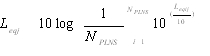
This section sets forth a systematic set of procedures for determination of equivalent sound level (Leq) using as an example the determination of a 1-hour Leq corrected for background ambient sound. The proposed protocols are based on the recommendations of the Department’s noise study entitled “ Proposed Revisions to Property Line Noise Source Measurement Procedures.” These protocols prescribe detailed data collection requirements, and equations for averaging sound data on an energy basis. In addition, Section 910.106 prescribes procedures correcting the raw equivalent sound level for background ambient sound. The proposal also prescribes detailed procedures for measuring background ambient sound that include both direct measurement methods and the use of Tables of long-term background ambient.
| Section 910.107 | Measurement Techniques for Highly-Impulsive Sound under 35 Ill. Adm. Code 901.104 |
Two equally valid methods are proposed for measuring highly-impulsive sound. The first method, termed as the “General Method” at Section 901.107(b), provides for A-weighted Leq measurement using the procedures set forth in Sections 910.105 and 910.106. The second method, which is referred to as the “Controlled Test Method” at Section 910.107(c), involves the determination of total sound exposure per hour. Again, the Board notes that the proposed protocols are based on the Department’s noise study.
35 Ill. Adm. Code 901: Sound Emission Standards and Limitations for Property Line-Noise-Sources
The proposed changes to Part 901 update the existing Standard Land Use Coding Manual (SLUCM) based land classification, and revise the impulsive sound standards. A brief description of the proposed changes is provided below.
Section 901.101 Classification of Land According to Use
The changes proposed to this section update the existing land use classification, which is based on SLUCM codes, with the Land-Based Classification Standards (LBCS) codes. The Board notes that the LBCS, which replaced the 1965 SLUCM, provides a consistent model for classifying land uses based on a multi-dimensional land use classification model. While the LBCS provides for classification of land use based on activity, function, structure type, site development character, and ownership, the Board is proposing to update the SLUCM codes with the LBCS function codes. In this regard, the Board believes that the LBCS functional categories are very similar to the SLUCM categories listed in the existing regulations at Part 901, Appendix B.
Consistent with the changes proposed to Section 901.101, the instant proposal also updates the SLUCM Codes Table in Part 901, Appendix B with the LBCS function codes. For more detailed information concerning the LBCS, the Board directs interested persons to review the LBCS executive summary or visit the LBCS web page ( www.planning.org/LBCS ).
Section 901.104 Highly-Impulsive Sound
The proposed changes to Section 901.104 clarify that the impulsive sound standards are based on 1-hour A-weighted equivalent sound levels, and revise the numeric standards. The revisions to the numeric limits for highly-impulsive sound are based on the recommendations of the Department’s Impulse Noise Study. These revisions are intended to bring highly impulsive noise standards into conformity with the standards set forth in Sections 901.102 and 901.103 in terms of the effective community response. A more detailed discussion of the proposed revisions may be found in the proposal.
Section 901.109 Highly-Impulsive Sound From Explosive Blasting
Based on the recommendations of the Department’s noise study, the Board has revised the peak level limits to be consistent with the U.S. Bureau of Mines requirements. The proposal also specifies lower limits for multiple events in one day. In addition, the instant proposal clarifies when the daytime and nighttime hours begin and end. The Board has also changed the reference to SLUCM codes to LBCS codes.
CONCLUSION
The Board will proceed to public notice with the following proposal. The Board will hold hearings and accept comment on the proposal prior to determining whether or not to proceed to first notice.
To facilitate understanding of the possible modifications to Ill. Adm. Code 35 Part 951 suggested as part of this Rulemaking, the Board edited that document using the traditional strike through and underlining approach to new language. The Board encourages interested persons to contact the hearing officer to be added to the notice list.
ORDER
The Board adopts this proposal for public comment. The Board intends to conduct two pre-first notice hearings on the proposal, one in Chicago and one in Springfield.
TITLE 35: ENVIRONMENTAL PROTECTION
SUBTITLE H: NOISE
CHAPTER I: POLLUTION CONTROL BOARD
PART 901
SOUND EMISSION STANDARDS AND LIMITATIONS FOR PROPERTY LINE-NOISE-SOURCES
Section
901.101 |
Classification of Land According to Use |
901.102 |
Sound Emitted to Class A Land |
901.103 |
Sound Emitted to Class B Land |
901.104 |
Highly - Impulsive Sound |
901.105 |
Impact Forging Operations |
901.106 |
Prominent Discrete Tones |
901.107 |
Exceptions |
901.108 |
Compliance Dates for Part 901 |
901.109 |
Highly - Impulsive Sound from Explosive Blasting |
901.110 |
Amforge Operational Level |
901.111 |
Modern Drop Forge Operational Level |
901.112 |
Wyman-Gordon Operational Level |
901.113 |
Wagner Casting Site-Specific Operational Level |
901.114 |
Moline Forge Operational Level |
901.115 |
Cornell Forge Hampshire Division Site-Specific Operational Level |
901.116 |
Forgings and Stampings, Inc. Operational Level |
901.117 |
Rockford Drop Forge Company Operational Level |
901.118 |
Atlas Forgings Division of Scot Forge Operational Level |
901.119 |
Clifford-Jacobs Operational Level |
901.120 |
C.S. Norcross Operational Level |
901.121 |
Vaughan & Bushnell Operational Level |
APPENDIX A |
Old Rule Numbers Referenced |
APPENDIX B |
Standard Land Use Coding System |
AUTHORITY: Implementing Section 25 and authorized by Section 27 of the Environmental Protection Act (Ill. Rev. Stat. 1985, ch. 111 1/2 pars. 1025 and 1027).
SOURCE: Originally filed as Part 2 of Chapter 8: Noise Pollution, effective August 10, 1973; amended at 2 Ill. Reg. 27, p. 223, effective June 26, 1978; amended at 5 Ill. Reg. 6371, effective June 1, 1981; amended at 5 Ill. Reg. 8533, effective August 10, 1981; amended at 6 Ill. Reg. 10960, effective September 1, 1982; codified at 7 Ill. Reg. 13646; amended at 7 Ill. Reg. 14519, effective October 17, 1983; amended in R83-35 at 8 Ill. Reg. 18893, effective September 25, 1984; amended in R83-33, 26, 29, 30 and R83-34 at 9 Ill. Reg. 1405, effective January 17, 1985; Section 901.105(f)(1), (2) and (3) recodified to Sections 901.110, 901.111 and 901.112 at 9 Ill. Reg. 7147; amended in R83-25, 31 and 32 at 9 Ill. Reg. 7149, effective May 7, 1985; amended in R83-7 at 11 Ill. Reg. 3136, effective January 28, 1987; amended in R03-9 at______see Reg._____, effective ______________.
Section 901.101 Classification of Land According to Use
| a) | Class A land will |
| b) | Class B land will |
| c) | Class C land will |
| d) | A parcel or tract of land used as specified by Land-Based Classification Standards (LBCS) |
Section 901.102 Sound Emitted to Class A Land
| a) | Except as elsewhere in this Part provided, no person shall cause or allow the emission of sound during daytime hours from any property-line-noise-source located on any Class A, B or C land to any receiving Class A land which exceeds any allowable octave band sound pressure level specified in the following table, when measured at any point within such receiving Class A land, provided, however, that no measurement of sound pressure levels shall be made less than 25 feet from such property-line-noise-source. |
Allowable Octave Band Sound Pressure Levels (dB) of Sound Emitted to any Receiving Class A Land from |
Octave Band Center
Frequency (Hertz) |
Class C Land |
Class B Land |
Class A Land |
31.5 |
75 |
72 |
72 |
63 |
74 |
71 |
71 |
125 |
69 |
65 |
65 |
250 |
64 |
57 |
57 |
500 |
58 |
51 |
51 |
1000 |
52 |
45 |
45 |
2000 |
47 |
39 |
39 |
4000 |
43 |
34 |
34 |
8000 |
40 |
32 |
32 |
| b) | Except as elsewhere in this Part provided, no person shall cause or allow the emission of sound during nighttime hours from any property-line-noise-source located on any Class A, B or C land to any receiving Class A land which exceeds any allowable octave band sound pressure level specified in the following table, when measured at any point within such receiving Class A land, provided, however, that no measurement of sound pressure levels shall be made less than 25 feet from such property-line-noise-source. |
Allowable Octave Band Sound Pressure Levels (dB) of Sound Emitted to any Receiving Class A Land from |
Octave Band Center
Frequency (Hertz) |
Class C Land |
Class B Land |
Class A Land |
31.5 |
69 |
63 |
63 |
63 |
67 |
61 |
61 |
125 |
62 |
55 |
55 |
250 |
54 |
47 |
47 |
500 |
47 |
40 |
40 |
1000 |
41 |
35 |
35 |
2000 |
36 |
30 |
30 |
4000 |
32 |
25 |
25 |
8000 |
32 |
25 |
25 |
Section 901.103 Sound Emitted to Class B Land
Except as elsewhere in this Part provided, no person shall cause or allow the emission of sound from any property-line-noise-source located on any Class A, B or C land to any receiving Class B land which exceeds any allowable octave band sound pressure level specified in the following table, when measured at any point within such receiving Class B land, provided, however, that no measurement of sound pressure levels shall be made less than 25 feet from such property-line-noise-source.
Octave Band Center Frequency (Hertz) |
Allowable Octave Band Sound Pressure Levels (dB) of Sound Emitted to any Receiving Class B Land from |
Class C Land |
Class B Land |
Class A Land |
|
31.5 |
80 |
79 |
72 |
63 |
79 |
78 |
71 |
125 |
74 |
72 |
65 |
250 |
69 |
64 |
57 |
500 |
63 |
58 |
51 |
1000 |
57 |
52 |
45 |
2000 |
52 |
46 |
39 |
4000 |
48 |
41 |
34 |
8000 |
45 |
39 |
32 |
Section 901.104 Highly - Impulsive Sound
Except as elsewhere in this Part provided, no person shall cause or allow the emission of highly - impulsive sound from any property-line-noise-source located on any Class A, B, or C land to any receiving Class A or B land which exceeds the allowable 1-hour A-weighted equivalent sound levels (1-hr Leq), measured with fast dynamic characteristic, specified in the following table when measured at any point within such receiving Class A or B land, provided, however, that no measurement of sound levels shall be made less than 25 feet from such property-line-noise-source.
Classification of Land on which Property-Line Noise-Source is Located |
Allowable 1-Hour A-weighted Sound Levels (Leq) in Decibels of Highly-Impulsive Sound Emitted to Receiving Class A or B Land |
Class A Land |
Class B Land |
Daytime |
Nighttime |
|
Class A Land |
|
|
|
Class B Land |
|
|
|
Class C Land |
|
|
|
(Source: Amended at 11 Ill. Reg. 3136, effective January 28, 1987)
Section 901.105 Impact Forging Operations
a) For purposes of this rule only the following are applicable:
| 1) | Daytime hours shall mean any continuous 16 hour period between 6:00 a.m. and 11:00 p.m. local time; and |
| 2) | Nighttime hours shall mean those 8 hours between 10:00 p.m. and 7:00 a.m. which are not part of the 16 continuous daytime hours. |
| 3) | The reference time for Leq, as defined in 35 Ill. Adm. Code 900.101 is one hour. |
| 4) | New Impacting Forging Operation is that property-line-noise-source comprised of impact forging operation on which construction began after September 1, 1982. |
| 5) | Existing Impact Forging Operation is that property-line-noise-source comprised of impact forging operations which are in existence on September 1, 1982, |
| b) | Emission Limitations for New Impact Forging Operation No impact forging operation shall cause or allow the emission of impulsive sound to any receiving Class A or B land which exceeds the allowable sound levels specified in the following table when measured at any point within such receiving land, provided however, that no measurement of sound levels shall be made less than 25 feet from such new impact forging operation's property-line. |
Allowable Highly- Impulsive Sound Levels Emitted
To Class A or B Land from New
Impact Forging Operation
Class B Land |
Class A Land |
Daytime |
Nighttime |
|
59.5Leq |
53.5 Leq |
48.5 Leq |
| c) | Limitations for Existing Impact Forging Operation | |
No existing impact forging operation shall cause or allow the emission of highly-impulsive sound to any receiving Class A or B land which exceeds the allowable sound levels specified in the following table, when measured at any point within such receiving land, provided however, that no measurement of sound levels shall be made less than 25 feet from such existing impact forging operation's property-line, unless such forging operation is granted a permanent site specific allowable operational level pursuant to subparagraph (d).
Allowable Highly- Impulsive Sound Levels Emitted
To Class A or B Land from Existing
Impact Forging Operation
Class B Land |
Class A Land |
Daytime |
Nighttime |
|
64.5Leq |
58.5Leq |
53.5 Leq |
| d) | Site Specific Allowable Operational Level for Existing Impact Forging Operation |
| 1) | An existing impact forging operation which does not comply with subparagraph (c) may seek a permanent site specific allowable operational level from the Board. A permanent site specific level is that level of operation allowed petitioner after review and approval by the Board and after implementation of abated measures, if any, approved by the Board. |
| 2) | Any existing impact forging operation seeking a permanent site specific operational level must submit as its petition the following: |
| A) | The location of the petitioner, a description of the surrounding community, and a map locating the petitioner within the community; |
| B) | A description of the petitioner's operations, the number and size of the petitioner's forging hammers, the current hours of hammer operation, the approximate number of forgings manufactured during each of the three prior calendar years and the approximate number of hammer blows used to manufacture the forgings. |
C) A description of any existing sound abatement measure.
| D) | The sound levels in excess of those permitted by subparagraph (c) emitted by the petitioner into the community, in 5 decibel increments measured in Leq, shown on the map of the community. |
| E) | The number of residences exposed to sound levels in excess of those permitted by subparagraph (c); |
| F) | A description of other significant sources of noise (mobile and stationary) and their location shown on the map of the community; |
| G) | A description of the proposed operational level and proposed physical abatement measures, if any, a schedule for their implementation and their costs; |
| H) | The predicted improvement in community sound levels as a result of implementation of the proposed abatement measures; and |
| I) | A description of the economic and technical considerations which justify the permanent site specific allowable operational level sought by petitioner. |
| 3) | An existing impact forging operation seeking a permanent site specific operational level shall prepare and file its petition with the Board and Agency as applicable no later than December 1, 1983. |
| 4) | The Agency shall prepare a written evaluation regarding each petition seeking a permanent site specific operational level and shall file said evaluation within ninety (90) days following receipt of the petition with both the Board and the petitioner. |
e) Land Use Classifications Preserved
The land use classifications in effect within a one-mile radius of an existing impact forging operation on September 1, 1982 shall remain the applicable land use classification for enforcement of these rules against an existing forging operation and any future modification thereof, regardless of actual subsequent changes in land use unless such actual changes would impose less restrictive limitations on the impact forging operations.
| f) | Site-Specific Operational Levels Each individual existing forging operation identified in Sections 901.110, 901.111 and 901.112 must comply with the site-specific operational level defined, or is otherwise subject to Section 901.105(c). |
(Source: Section 901.105(f)(1), (2), and (3) recodified to Sections 901.110, 901.111 and 901.112 at 9 Ill. Reg. 7147)
Section 901.106 Prominent Discrete Tones
| a) | No person shall cause or allow the emission of any prominent discrete tone from any property-line-noise-source located on any Class A, B or C land to any receiving Class A, B or C land, provided, however, that no measurement of one-third octave band sound pressure levels shall be made less than 25 feet from such property-line source. |
| b) | This rule shall not apply to prominent discrete tones having a one-third octave band sound pressure level 10 or more dB below the allowable octave band sound pressure level specified in the applicable tables in Sections 901.102 through 901.104 for the octave band which contains such one-third octave band. In the application of this sub-section, the applicable table for sound emitted from any existing property-line noise source to receiving Class A land, for both daytime and nighttime operations shall be found in Section 901.102(a). |
Section 901.107 Exceptions
| a) | Sections 901.102 through 901.106 inclusive shall not apply to sound emitted from land used as specified by SLUCM Codes 110, 140, 190, 691, and 742 except 7424 and 7425. |
| b) | Sections 901.102 through 901.106 inclusive shall not apply to sound emitted from emergency warning devices and unregulated safety relief valves. |
| c) | Sections 901.102 through 901.106 inclusive shall not apply to sound emitted from lawn care maintenance equipment and agricultural field machinery used during daytime hours. For the purposes of this sub-section, grain dryers operated off the farm shall not be considered agricultural field machinery. |
| d) | Sections 901.102 through 901.106 inclusive shall not apply to sound emitted from equipment being used for construction. |
| e) | Section 901.102(b) shall not apply to sound emitted from existing property-line-noise-sources during nighttime hours, provided, however, that sound emitted from such existing property-line-noise-sources shall be governed during nighttime hours by the limits specified in Section 901.102. |
| f) | Sections 901.102 through 901.106 inclusive shall not apply to the operation of any vehicle registered for highway use while such vehicle is being operated within any land used as specified by Section 901.101 in the course of ingress to or egress from a highway. |
| g) | Sections 901.102 through 901.106 inclusive shall not apply to sound emitted from land used as specified by SLUCM Codes 7223 and 7311 when used for automobile and motorcycle racing; and, any land used for contests, rallies, time trials, test runs or similar operations of any self-propelled device, and upon or by which any person is or may be transported or drawn, when such self-propelled device is actually being used for sport or recreation and is actually participating in an activity or event organized, regulated, and supervised under the sponsorship and sanction of a club, organization or corporation having national or statewide recognition; provided, however, that the exceptions granted in this subparagraph shall not apply to any automobile and motorcycle race, contest, rally, time trial, test run or similar operation of any self-propelled device if such event is started between the hours of 10:30 p.m. to 7:00 a.m., local time weekdays, or between the hours of 11:00 p.m. and 7:00 a.m., local time, weekend days. |
| h) | Section 901.104 shall not apply to impulsive sound produced by explosive blasting activities conducted on any Class C land used as specified by SLUCM codes 852 and 854, but such operations shall be governed by Section 901.109.. |
| i) | Sections 901.102 through 901.106 inclusive, shall not apply to sound emitted from snowmobiles. |
(Source: Amended at 6 Ill. Reg. 10960, effective September 1, 1982)
Section 901.108 Compliance Dates for Part 901
| a) | Except as provided in subparagraphs (g), (i), and (j), every owner or operator of a new property-line-noise-source shall comply with the standards and limitations of this Part on and after August 10, 1973. |
| b) | Except as otherwise provided in this rule, every owner or operator of an existing property-line-noise-source shall comply with the standards and limitations of this Part on and August 10, 1974. |
| c) | Every owner or operator of an existing property-line-noise-source who emits sound which exceeds any allowable octave band sound pressure level of Section 901.102 or 901.103 by 10 dB or more in any octave band with a center frequency of 31.5 Hertz, 63 Hertz or 125 Hertz shall comply with the standards and limitations of this Part on and after February 10, 1975. |
| d) | Except as provided in subparagraphs (g) and (h), every owner or operator of an existing property-line-noise-source required to comply with Section 901.104 shall comply with the standards and limitations of this Part on and after February 10, 1975. |
| e) | Every owner or operator of an existing property-line-noise-source required to comply with Section 901.106 shall comply with the standards and limitations of this Part on and after February 10, 1975. |
f) Repealed
| g) | Every owner or operator of Class C land now and hereafter used as specified by SLUCM Code 4112 shall have until August 10, 1976 to bring the sound from railroad car coupling in compliance with Section 901.104. |
| h) | Existing impact forging operations as defined in Section 901.105 which do not seek permanent site specific allowable operational levels shall comply with Section 901.105 by December 1, 1983. Those seeking permanent site specific allowable operational levels pursuant to Section 901.105(d) shall comply as of the effective date of the site specific rule granted or denied. |
| i) | Every owner or operator of Class C land now or hereafter used as specified by SLUCM Code 291 shall comply with the standards and limitations of this Part on August 10, 1975. |
| j) | Every owner or operator of Class C land now or hereafter used as specified by SLUCM Code 7223 and 7311 when used for automobile and motorcycle racing shall comply with the standards and limitations of this Part on February 10, 1976. |
(Source: Amended at 6 Ill. Reg. 10960, effective September 1, 1982)
Section 901.109 Highly-Impulsive Sound From Explosive Blasting
| a) | During the daytime hours, that cover the period after sunrise and before sunset, no person shall cause or allow any explosive blasting conducted on any Class C land used as specified by SLUCM Codes 852 and 854 so as to allow the emission of sound to any receiving Class A or B land which exceeds the allowable outdoor C-weighted sound levels, measured with the slow dynamic characteristic, specified in the following table, when measured at any point, of reasonable interference with the use of such receiving Class A or B land. |
Allowable Outdoor C-Weighted
Sound Exposure Levels in Decibels of Explosive
Blasting Sounds Emitted to Receiving
Class A or B Land from Any Class C Land
Used as Specified by LBCS SLUCM Code8300 through 8500 852 or 854
Receiving Class A Land |
Receiving Class B Land |
|
|
The allowable sound exposure level limits in the above table shall be lowered by three decibels (3 dB) for each doubling of the number of blasts during the day or night.
| b) | Compliance with outdoor peak sound pressure level limits in the following table shall constitute prima facie level limits of this rule when measured on such receiving Class A or B land. |
Equivalent Maximum Sound Pressure Level (Peak) Limits in Decibels
Lower Frequency Limit of Measuring System for Flat Response, a Variation from Linear Response of + or - 3dB (Hz) |
Receiving Class A Land (dB) |
Receiving Class B Land (dB) |
< o 0.1 |
135 |
140 |
< 2.0 but greater than 0.1 |
132 |
137 |
< 6.0 but greater than 2.0 |
130 |
135 |
The allowable equivalent maximum sound pressure level limits in the above table shall be lowered by two decibels (2 dB) for each doubling of the number of blasts
during the day or night.
| c) | During the period defined by (1) the beginning of the nighttime hours (10:00 pm) or sunset, whichever occurs earlier and (2) ending of the nighttime hours (7:00 am)or , |
| d) | Persons causing or allowing explosive blasting to be conducted on any Class C land used as specified by SLUCM code 852 or 854 shall notify the local public of such blasting prior to its occurrence, except when emergency situations require unscheduled blasting, by publication of a blasting schedule, identifying the work days or dates and time periods when explosives are expected to be detonated, at least every three months in a newspaper of general circulation in the locality of the blast site. |
(Source: Amended at 6 Ill. Reg. 10960, effective September 1, 1982)
Section 901.110 Amforge Operational Level
Amforge Division of Rockwell International located at 119th Street, Chicago,
Illinois shall:
a) Operate only ten forging hammers at any one time; and
| b) | Operation of its forging hammers is limited to the hours of 7:00 a.m. through 11:00 p.m., with occasional operations beginning at 6:00 a.m. and ending at midnight, Monday through Saturdays; and |
| c) | Sound absorptive materials shall be installed on each of the forging hammer structures as each is routinely overhauled, but no later than January 1, 1987. |
(Source: Recodified from Section 901.105(f)(1) at 9 Ill. Reg. 7147)
Section 901.111 Modern Drop Forge Operational Level
Modern Drop Forge Company located at 139th Street and Western Avenue in Blue
Island, Illinois shall:
a) Operate only twenty-one forging hammers at any one time; and
| b) | Operate its forging hammers only during the hours of 6:00 a.m. through midnight, Mondays through Fridays, and 6:30 a.m. until 7:30 p.m. on Saturdays. |
(Source: Recodified from Section 901.105(f) (2) at 9 Ill. Reg. 7147)
Section 901.112 Wyman-Gordon Operational Level
Wyman-Gordon Company located at 147th Street and Wood Street, Harvey, Illinois shall:
| a) | Operate only six forging hammer units, each consisting of two hammers, after January 1, 1984. |
| b) | Operate forging units in Buildings 6 and 7, located at the southern perimeter of the Wyman-Gordon Company's Harvey facility, to produce no more than 20% of the total annual hammer production at the Harvey facility; |
| c) | Operate forging units between the hours of 6:00 a.m. and midnight; limit forging operations on Saturdays and Sundays to no more than half a year's total; and limit forging operations during the hours of 6:00 a.m. and 7:00 a.m. and 11:00 p.m. and midnight to less than 2% of the Harvey's facility total annual hammer production; and |
| d) | Consolidate the two existing steel inventory yards at the one located north of Building 75 no later than January 1, 1984. |
(Source: Recodified from Section 901.105(f)(3) at 9 Ill. Reg. 7147)
Section 901.113 Wagner Casting Site-Specific Operational Level
Wagner Casting Company and future owners of the forging facility located at the southeast corner of Sangamon and Jasper Streets in Decatur, Illinois, must comply with the following site-specific operational level or are otherwise subject to Section 901.105(c):
a) Shall operate no more than nine forging hammers at any one time; and
| b) | Shall operate its forging hammers only between the hours of 5:00 a.m. Monday through 9:00 p.m. Saturday. |
(Source: Added at 8 Ill. Reg. 18893, effective September 2, 1984).
Section 901.114 Moline Forge Operational Level
Moline Forge and future owners of the forging facility located at 4101 Fourth Avenue, Moline, Illinois, shall comply with the following site-specific operational level:
a) Operate no more than nine forging hammers at any one time; and
| b) | Operate its forging hammers only between the hours of 6:00 a.m. until 11:00 p.m. Monday through Friday and from 6:00 a.m. until 3:30 p.m. on Saturdays. |
(Source: Added at 9 Ill. Reg. 1405, effective January 17, 1985)
| Section 901.115 | Cornell Forge Hampshire Division Site-Specific Operational Level |
Cornell Forge, Hampshire Division and future owners of the forging facility located at Walker Road, Hampshire, Illinois, shall comply with the following site-specific operational level:
a) Operate no more than seven forging hammers at any one time; and
| b) | Operate its forging hammers only on Monday through Saturday between the hours of 7:00 a.m. to 3:30 p.m. with an additional shift that may run from either 3:30 p.m. to 12:00 p.m. or from 10:30 p.m. to 7:00 a.m. |
(Source: Added at 9 Ill. Reg. 1405, effective January 17, 1985)
Section 901.116 Forgings and Stampings, Inc. Operational Level
Forgings and Stampings, Inc. and future owners of the forging facility located
at 1025 23rd Avenue, Rockford, Illinois, shall comply with the following
site-specific operational level:
a) Operate no more than six forging hammers at any one time; and
| b) | Operate its forging hammers only between the hours of 6:00 a.m. and 6:00 p.m. Monday through Friday and 6:00 a.m. and 2:00 p.m. on Saturday. |
(Source: Added at 9 Ill. Reg. 1405, effective January 17, 1985)
Section 901.117 Rockford Drop Forge Company Operational Level
Rockford Drop Forge Company and future owners of the forging facility located at 2031 Ninth Street, Rockford, Illinois, shall comply with the following site-specific operational level:
a) Operate no more than twelve forging hammers at any one time; and
| b) | Operate its forging hammers only between the hours of 6:00 a.m. and 10:00 p.m. Monday through Saturday. |
(Source: Added at 9 Ill. Reg. 1405, effective January 17, 1985)
Section 901.118 Atlas Forgings Division of Scot Forge Operational Level
Atlas Forge Division of Scot Forge and future owners of the forging facility located at 1501 South 55th Court, Cicero, Illinois, shall comply with the following site-specific operational level:
a) Operate no more than three forging hammers at any one time; and
| b) | Operate its forging hammers only between the hours of 6:00 a.m. and 6:00 p.m. Monday through Saturday. |
(Source: Added at 9 Ill. Reg. 1405, effective January 17, 1985)
Section 901.119 Clifford-Jacobs Operational Level
Clifford-Jacobs Forging Company and future owners of the forging facility located at North Market Street, Champaign, Illinois, shall comply with the following site-specific operational level:
a) Operate no more than fourteen hammers at any one time; and
| b) | Operate its forging hammers only between the hours of 6:00 a.m. and 11:00 p.m. Monday through Saturday. |
(Source: Added at 9 Ill. Reg. 7149, effective May 7, 1985)
Section 901.120 C.S. Norcross Operational Level
C.S. Norcross & Sons Company and future owners of the forging facility located at the intersection of Davis and Dean Streets, Bushnell, Illinois, shall comply with the following site-specific operational level:
a) Operate no more than twelve forging hammers at any one time; and
| b) | Operate its forging hammers only between the hours of 7:00 a.m. and 1:00 a.m. Monday through Saturday. |
(Source: Added at 9 Ill. Reg. 7149, effective May 7, 1985)
Section 901.121 Vaughan & Bushnell Operational Level
Vaughan & Bushnell Manufacturing Company and the future owners of the forging facility located at the intersection of Davis and Main Streets, Bushnell, Illinois, shall comply with the following site-specific operational level:
a) Operate no more than ten hammers at any one time; and
| b) | Operate its forging hammers only between the hours of 6:00 a.m. and 1:30 p.m. Monday through Saturday. |
(Source: Added at 9 Ill. Reg. 7149, effective May 7, 1985)
Section 901.APPENDIX A Old Rule Numbers Referenced
The following table is provided to aid in referencing old Board rule numbers to section numbers pursuant to codification.
Old Part 2 of Chapter 8 |
35 Ill. Adm. Code Part 901 |
Rule 201 |
Section 901.101 |
Rule 202 |
Section 901.102(a) |
Rule 203 |
Section 901.102(b) |
Rule 204 |
Section 901.103 |
Rule 205 |
Repealed |
Rule 205 (was old 206) |
Section 901.104 |
Rule 206 (new rule) |
Section 901.105 |
Rule 207 |
Section 901.106 |
Rule 208 |
Section 901.107 |
Rule 209 |
Section 901.108 |
Rule 210 |
Section 901.109 |
Added in Codification |
Appendix A |
Unnumbered Appendix to Chapter 8, Part 2 |
Appendix B |
Section 901.APPENDIX B Standard Land Use Coding System
B. A STANDARD SYSTEM FOR IDENTIFYING AND CODING LAND USE ACTIVITIES -- TWO-, THREE-, AND FOUR-DIGIT
35 IAC 901 Appendix B: Land-Based Classification Standards
LBCS |
Main Category |
Function Code |
Description |
35 IAC 901 Land Class |
|
Residence or accommodation functions |
1000 |
Residence or accommodation functions |
A |
|
1100 |
Private household |
|||
1200 |
Housing services for the elderly |
|
||
1210 |
Retirement housing services |
½ |
||
1220 |
Congregate living services |
½ |
||
1230 |
Assisted-living services |
½ |
||
1240 |
Life care or continuing care services |
½ |
||
1250 |
Skilled-nursing services |
½ |
||
1300 |
Hotels, motels, or other accommodation services |
½ |
||
1310 |
Bed and breakfast inn |
½ |
||
1320 |
Rooming and boarding |
¯ |
||
1330 |
Hotel, motel, or tourist court |
|||
1340 |
Casino hotel
|
A |
||
General sales or services |
2000 |
General sales or services |
||
2100 |
Retail sales or service |
B |
||
2110 |
Automobile sales or service establishment |
|||
2111 |
Car dealer |
|
||
2112 |
Bus, truck, mobile homes, or large vehicles |
½ |
||
2113 |
Bicycle, motorcycle, ATV, etc. |
½ |
||
2114 |
Boat or marine craft dealer |
½ |
||
2115 |
Parts, accessories, or tires |
½ |
||
2116 |
Gasoline service |
½ |
||
2120 |
Heavy consumer goods sales or service |
½ |
||
2121 |
Furniture or home furnishings |
½ |
||
2122 |
Hardware, home centers, etc. |
½ |
||
2123 |
Lawn and garden supplies |
½ |
||
2124 |
Department store, warehouse club or superstore |
½ |
||
2125 |
Electronics and Appliances |
½ |
||
2126 |
Lumber yard and building materials |
½ |
||
2127 |
Heating and plumbing equipment |
½ |
||
2130 |
Durable consumer goods sales and service |
½ |
||
2131 |
Computer and software |
½ |
||
2132 |
Camera and photographic supplies |
½ |
||
2133 |
Clothing, jewelry, luggage, shoes, etc. |
½ |
||
2134 |
Sporting goods, toy and hobby, and musical instruments |
½ |
||
2135 |
Books, magazines, music, stationery |
½ |
||
2140 |
Consumer goods, other |
½ |
||
2141 |
Florist |
½ |
||
2142 |
Art dealers, supplies, sales and service |
½ |
||
2143 |
Tobacco or tobacconist establishment |
½ |
||
2144 |
Mail order or direct selling establishment |
½ |
||
2145 |
Antique shops, flea markets, etc. |
½ |
||
2150 |
Grocery, food, beverage, dairy, etc. |
½ |
||
2151 |
Grocery store, supermarket, or bakery |
½ |
||
2152 |
Convenience store |
½ |
||
2153 |
Specialty food store |
½ |
||
2154 |
Fruit and vegetable store |
½ |
||
2155 |
Beer, wine, and liquor store |
½ |
||
2160 |
Health and personal care |
½ |
||
2161 |
Pharmacy or drug store |
½ |
||
2162 |
Cosmetic and beauty supplies |
½ |
||
2163 |
Optical |
½ |
||
2200 |
Finance and Insurance |
½ |
||
2210 |
Bank, credit union, or savings institution |
½ |
||
2220 |
Credit and finance establishment |
½ |
||
2230 |
Investment banking, securities, and brokerages |
½ |
||
2240 |
Insurance-related establishment |
½ |
||
2250 |
Fund, trust, or other financial establishment |
½ |
||
2300 |
Real estate, and rental and leasing |
½ |
||
2310 |
Real estate services |
½ |
||
2320 |
Property management services |
½ |
||
2321 |
Commercial property-related |
½ |
||
2322 |
Rental housing-related |
½ |
||
2330 |
Rental and leasing |
½ |
||
2331 |
Cars |
½ |
||
2332 |
Leasing trucks, trailers, RVs, etc. |
½ |
||
2333 |
Recreational goods rental |
½ |
||
2334 |
Leasing commercial, industrial machinery, and equipment |
¯ |
||
2335 |
Consumer goods rental |
|||
2336 |
Intellectual property rental (video, music, software, etc.) |
B |
||
2400 |
Business, professional, scientific, and technical services |
|||
2410 |
Professional services |
A |
||
2411 |
Legal services |
|||
2412 |
Accounting, tax, bookkeeping, payroll services |
|
||
2413 |
Architectural, engineering, and related services |
½ |
||
2414 |
Graphic, industrial, interior design services |
½ |
||
2415 |
Consulting services (management, environmental, etc.) |
½ |
||
2416 |
Research and development services (scientific, etc.) |
½ |
||
2417 |
Advertising, media, and photography services |
½ |
||
2418 |
Veterinary services |
½ |
||
2420 |
Administrative services |
½ |
||
2421 |
Office and administrative services |
½ |
||
2422 |
Facilities support services |
½ |
||
2423 |
Employment agency |
½ |
||
2424 |
Business support services |
½ |
||
2425 |
Collection agency |
½ |
||
2430 |
Travel arrangement and reservation services |
½ |
||
2440 |
Investigation and security services |
½ |
||
2450 |
Services to buildings and dwellings |
½ |
||
2451 |
Extermination and pest control |
½ |
||
2452 |
Janitorial |
½ |
||
2453 |
Landscaping |
¯ |
||
2454 |
Carpet and upholstery cleaning |
|||
2455 |
Packing, crating, and convention and trade show services |
A |
||
2500 |
Food services |
B |
||
2510 |
Full-service restaurant |
|||
2520 |
Cafeteria or limited service restaurant |
|
||
2530 |
Snack or nonalcoholic bar |
½ |
||
2540 |
Bar or drinking place |
½ |
||
2550 |
Mobile food services |
½ |
||
2560 |
Caterer |
½ |
||
2570 |
Food service contractor |
½ |
||
2580 |
Vending machine operator |
½ |
||
2600 |
Personal services |
½ |
||
2700 |
Pet and animal sales or service (except veterinary) |
¯ |
||
2710 |
Pet or pet supply store |
|||
2720 |
Animal and pet services
|
B
|
||
Manufacturing and wholesale trade |
3000 |
Manufacturing and wholesale trade |
||
3100 |
Food, textiles, and related products |
C |
||
3110 |
Food and beverages |
|||
3120 |
Tobacco manufacturing establishment |
|
||
3130 |
Textiles |
½ |
||
3140 |
Leather and allied products |
½ |
||
3200 |
Wood, paper, and printing products |
½ |
||
3210 |
Wood products establishment |
½ |
||
3220 |
Paper and printing materials |
½ |
||
3230 |
Furniture and related products |
½ |
||
3300 |
Chemicals, and metals, machinery, and electronics manufacturing |
½ ½ |
||
3310 |
Petroleum and coal products |
½ |
||
3320 |
Chemicals, plastics, and rubber products |
½ |
||
3330 |
Nonmetallic mineral products |
½ |
||
3340 |
Primary metal manufacturing |
½ |
||
3350 |
Machinery manufacturing |
½ |
||
3360 |
Electrical equipment, appliance, and components manufacturing |
½ ½ |
||
3370 |
Transportation equipment, automobiles, etc. |
½ |
||
3400 |
Miscellaneous manufacturing |
½ |
||
3410 |
Jewelry and silverware |
½ |
||
3420 |
Dolls, toys, games, and musical instruments |
¯ |
||
3430 |
Office supplies, inks, etc. |
|||
3440 |
Signs |
C |
||
3500 |
Wholesale trade establishment |
B |
||
3510 |
Durable goods |
|
||
3520 |
Nondurable goods |
¯ |
||
3600 |
Warehouse and storage services
|
B
|
||
Transportation, communication, information, and utilities |
4000 |
Transportation, communication, information, and utilities |
||
4100 |
Transportation services |
|||
4110 |
Air transportation |
U |
||
4111 |
Air passenger transportation |
|||
4112 |
Air freight transportation |
|
||
4113 |
Airport and support establishment |
¯ |
||
4114 |
Aircraft and accessories |
|||
4115 |
Other air transportation (including scenic, balloon, etc.) |
U |
||
4120 |
Rail transportation |
C |
||
4121 |
Rail passenger transportation |
|||
4122 |
Rail freight transportation |
|
||
4123 |
Rail transportation support establishment |
½ |
||
4130 |
Road, ground passenger, and transit transportation |
½ |
||
4131 |
Local transit systems--mixed mode |
½ |
||
4132 |
Local transit systems--commuter rail |
½ |
||
4133 |
Local transit systems--bus, special needs, and other motor vehicles |
½ ½ |
||
4134 |
Interurban, charter bus, and other similar establishments |
½ |
||
4135 |
School and employee bus transportation |
½ |
||
4136 |
Special purpose transit transportation (including scenic, sightseeing, etc.) |
½ ½ |
||
4137 |
Taxi and limousine service |
½ |
||
4138 |
Towing and other road and ground services |
½ |
||
4140 |
Truck and freight transportation services |
½ |
||
4141 |
General freight trucking, local |
½ |
||
4142 |
General freight trucking, long-distance |
½ |
||
4143 |
Freight trucking, specialized (used household and office goods) |
½ ½ |
||
4144 |
Freight trucking, specialized (except used goods) |
½ |
||
4150 |
Marine and water transportation |
½ |
||
4151 |
Marine passenger transportation |
½ |
||
4152 |
Marine freight transportation |
½ |
||
4153 |
Marine port and harbor operations |
½ |
||
4154 |
Marine cargo handling and dry dock services |
½ |
||
4155 |
Marine navigational and other services |
½ |
||
4160 |
Courier and messenger services |
¯ |
||
4170 |
Postal services |
|||
4180 |
Pipeline transportation |
C |
||
4200 |
Communications and information |
|||
4210 |
Publishing |
C |
||
4211 |
Newspapers, books, periodicals, etc. |
« |
||
4212 |
Software publisher |
C |
||
4220 |
Motion pictures and sound recording |
B |
||
4221 |
Motion Picture and video production, publishing, and distribution |
|
||
4222 |
Motion picture viewing and exhibition services |
½ |
||
4223 |
Sound recording, production, publishing, and distribution |
½ |
||
4230 |
Telecommunications and broadcasting |
½ |
||
4231 |
Radio and television broadcasting |
½ |
||
4232 |
Cable networks and distribution |
½ |
||
4233 |
Wireless telecommunications |
½ |
||
4234 |
Telephone and other wired telecommunications |
½ |
||
4240 |
Information services and data processing industries |
½ |
||
4241 |
Online information services |
¯ |
||
4242 |
Libraries and archives |
|||
4243 |
News syndicate |
B |
||
4300 |
Utilities and utility services |
C |
||
4310 |
Electric power |
|||
4311 |
Hydroelectric |
|
||
4312 |
Fossil |
½ |
||
4313 |
Nuclear |
½ |
||
4314 |
Alternative energy sources |
½ |
||
4320 |
Natural gas, petroleum, fuels, etc. |
½ |
||
4330 |
Water, steam, air conditioning supply |
½ |
||
4331 |
Drinking water |
½ |
||
4332 |
Irrigation and industrial water supply |
½ |
||
4333 |
Air conditioning and steam supply |
½ |
||
4340 |
Sewer, solid waste, and related services |
½ |
||
4341 |
Hazardous waste collection |
½ |
||
4342 |
Hazardous waste treatment and disposal |
½ |
||
4343 |
Solid waste collection |
½ |
||
4344 |
Solid waste combustor or incinerator |
½ |
||
4345 |
Solid waste landfill |
½ |
||
4346 |
Waste treatment and disposal |
¯ |
||
4347 |
Septic tank and related services
|
C |
||
Arts, entertainment, and recreation |
5000 |
Arts, entertainment, and recreation |
||
5100 |
Performing arts or supporting establishment |
B |
||
5110 |
Theater, dance, or music establishment |
|||
5120 |
Sports team or club |
|
||
5130 |
Racetrack establishment |
½ |
||
5140 |
Promoter of performing arts, sports, and similar events |
¯ |
||
5150 |
Agent for management services |
|||
5160 |
Independent artist, writer, or performer |
B |
||
5200 |
Museums and other special purpose recreational institutions |
A |
||
5210 |
Museum |
|
||
5220 |
Historical or archeological institution |
¯ |
||
5230 |
Zoos, botanical gardens, arboreta, etc. |
A |
||
5300 |
Amusement, sports, or recreation establishment |
B |
||
5310 |
Amusement or theme park establishment |
|||
5320 |
Games arcade establishment |
|
||
5330 |
Casino or gambling establishment |
½ |
||
5340 |
Miniature golf establishment |
½ |
||
5350 |
Skiing |
½ |
||
5360 |
Marina or yachting club facility operators |
½ |
||
5370 |
Fitness, recreational sports, gym, or athletic club, |
½ |
||
5380 |
Bowling, billiards, pool, etc. |
¯ |
||
5390 |
Skating rinks, roller skates, etc. |
|||
5400 |
Camps, camping, and related establishments |
B |
||
5500 |
Natural and other recreational parks
|
A |
||
Education, public admin., health care, and other inst. |
6000 |
Education, public admin., health care, and other inst. |
||
6100 |
Educational services |
A |
||
6110 |
Nursery and preschool |
|||
6120 |
Grade schools |
|
||
6121 |
Elementary |
½ |
||
6122 |
Middle |
½ |
||
6123 |
Senior |
½ |
||
6124 |
Continuance |
½ |
||
6125 |
Alternate education services |
½ |
||
6126 |
Adult education services |
½ |
||
6130 |
Colleges and Universities |
½ |
||
6140 |
Technical, trade, and other specialty schools |
½ |
||
6141 |
Beauty schools |
½ |
||
6142 |
Business management |
½ |
||
6143 |
Computer training |
¯ |
||
6144 |
Driving education |
|||
6145 |
Fine and performing arts education |
A |
||
6146 |
Flight training |
U |
||
6147 |
Sports and recreation education |
B |
||
6200 |
Public administration |
B |
||
6210 |
Legislative and executive functions |
|
||
6220 |
Judicial functions |
¯ |
||
6221 |
Courts |
B |
||
6222 |
Correctional institutions |
A |
||
6300 |
Other government functions |
B |
||
6310 |
Military and national security |
|||
6320 |
Space research and technology |
|
||
6400 |
Public Safety |
½ |
||
6410 |
Fire and rescue |
¯ |
||
6420 |
Police |
|||
6430 |
Emergency response |
B |
||
6500 |
Health and human services |
A |
||
6510 |
Ambulatory or outpatient care services |
|||
6511 |
Clinics |
|
||
6512 |
Family planning and outpatient care centers |
½ |
||
6513 |
Medical and diagnostic laboratories |
½ |
||
6514 |
Blood and organ banks |
¯ |
||
6520 |
Nursing, supervision, and other rehabilitative services |
|||
6530 |
Hospital |
A |
||
6560 |
Social assistance, welfare, and charitable services |
B |
||
6561 |
Child and youth services |
|||
6562 |
Child day care |
|
||
6563 |
Community food services |
½ |
||
6564 |
Emergency and relief services |
½ |
||
6565 |
Other family services |
¯ |
||
6566 |
Services for elderly and disabled |
|||
6567 |
Veterans affairs |
B |
||
6568 |
Vocational rehabilitation |
A |
||
6600 |
Religious institutions |
A |
||
6700 |
Death care services |
B |
||
6710 |
Funeral homes and services |
|||
6720 |
Cremation services and cemeteries |
|
||
6800 |
Associations, nonprofit organizations, etc. |
½ |
||
6810 |
Labor and political organizations |
½ |
||
6820 |
Business associations and professional membership organizations |
¯ |
||
6830 |
Civic, social, and fraternal organizations
|
B |
||
Construction-related businesses |
7000 |
Construction-related businesses |
||
7100 |
Building, developing, and general contracting |
B |
||
7110 |
Residential construction |
|||
7120 |
Land development and subdivision |
|
||
7130 |
Industrial, commercial and institutional building construction |
½ |
||
7200 |
Machinery related |
½ |
||
7310 |
Building equipment and machinery installation contractors |
½ |
||
7320 |
Excavation contractor |
½ |
||
7330 |
Water well drilling contractor |
½ |
||
7340 |
Wrecking and demolition establishment |
½ |
||
7350 |
Structural steel erection contractor |
½ |
||
7360 |
Special trade contractor |
½ |
||
7370 |
Carpentry, floor, and tile contractor |
½ |
||
7380 |
Concrete contractor |
½ |
||
7310 |
Electrical contractor |
½ |
||
7320 |
Glass and glazing contractor |
½ |
||
7330 |
Masonry and drywall contractors |
½ |
||
7340 |
Painting and wall covering |
¯ |
||
7350 |
Plumbing, heating, and air-conditioning |
|||
7360 |
Roofing, siding, and sheet metal contractors |
B |
||
7400 |
Heavy construction |
C |
||
7410 |
Highway and street construction; |
|||
7420 |
Bridge and tunnel construction |
|
||
7430 |
Water, sewer, and pipeline construction |
¯ |
||
7440 |
Power lines, communication and transmission lines |
|||
7450 |
Industrial and other nonbuilding construction
|
C |
||
Mining and extraction establishments |
8000 |
Mining and extraction establishments |
C |
|
8100 |
Oil and natural gas |
|||
8200 |
Metals (iron, copper, etc.) |
|
||
8300 |
Coal |
¯ |
||
8400 |
Nonmetallic mining |
|||
8500 |
Quarrying and stone cutting establishment
|
C |
||
Agriculture, forestry, fishing and hunting |
9000 |
Agriculture, forestry, fishing and hunting |
C |
|
9100 |
Crop production |
|||
9110 |
Grain and oilseed |
|
||
9111 |
Wheat |
½ |
||
9112 |
Corn |
½ |
||
9113 |
Rice |
½ |
||
9114 |
Soybean and oilseed |
½ |
||
9115 |
Dry pea and bean |
½ |
||
9120 |
Vegetable farming or growing services |
½ |
||
9130 |
Fruits and trees |
½ |
||
9140 |
Greenhouse, nursery, and floriculture |
½ |
||
9141 |
Food crops grown under cover |
½ |
||
9142 |
Nursery and tree production |
½ |
||
9143 |
Floriculture production |
½ |
||
9150 |
All other crops |
½ |
||
9151 |
Tobacco crop |
½ |
||
9152 |
Cotton crop |
½ |
||
9153 |
Sugarcane crop |
½ |
||
9154 |
Hay |
½ |
||
9155 |
Peanut crop |
½ |
||
9200 |
Support functions for agriculture |
½ |
||
9210 |
Farm and farm labor management services |
½ |
||
9220 |
Spraying, dusting, and other related services |
½ |
||
9230 |
Crop harvesting and post harvest crop activities (including drying, siloing, etc.) |
½ ½ |
||
9240 |
Cotton ginning, grist milling, etc. |
½ |
||
9300 |
Animal production including slaughter |
½ |
||
9310 |
Cattle ranch and crops |
½ |
||
9311 |
Beef cattle ranch establishments |
½ |
||
9312 |
Cattle feedlot establishment |
½ |
||
9320 |
Dairy cattle and milk production |
½ |
||
9330 |
Hog and pig farm |
½ |
||
9340 |
Poultry and egg production and hatcheries |
½ |
||
9350 |
Sheep and goat farming establishments |
½ |
||
9360 |
Fish hatcheries, fisheries, and aquaculture |
½ |
||
9370 |
All other animal production |
½ |
||
9371 |
Apiculture (bees, wax, and related operations) |
½ |
||
9372 |
Horse and equine production |
½ |
||
9373 |
Fur-bearing animal production |
½ |
||
9380 |
Support functions for animal production |
½ |
||
9400 |
Forestry and Logging |
½ |
||
9410 |
Logging |
½ |
||
9420 |
Forest nurseries |
½ |
||
9430 |
Support functions for forestry |
½ |
||
9500 |
Fishing, hunting and trapping, game preserves |
½ |
||
9510 |
Fishing |
¯ |
||
9520 |
Hunting and trapping, game retreats, game and fishing preserves |
C |
||
9900 |
Unclassifiable function |
U |
||
9910 |
Not applicable to this dimension |
|
||
9990 |
To be determined |
¯ |
||
9999 |
To be determined
|
U |
TITLE 35: ENVIRONMENTAL PROTECTION
SUBTITLE H: NOISE
CHAPTER II: ENVIRONMENTAL PROTECTION AGENCY
PART 910
MEASUREMENT PROCEDURES FOR THE ENFORCEMENT
OF 35 ILL. ADM. CODE 900 & 901
Section
| 910.100 | General |
| 910.102 | Instrumentation |
| 910.103 | Definitions |
| 910.104 | Measurement Techniques for 35 Ill. Adm. Code 900 |
| 910.105 | Measurement Techniques for 35 Ill. Adm. Code 901 |
| 910.106 | Protocols for Determination of Sound Levels | |
| 910.107 | Measurement Techniques for Highly-Impulsive Sound | |
AUTHORITY: Implementing and authorized by Sections 25 and 27 of the Environmental Protection Act (Ill. Rev. Stat., 1981, ch. 111 1/2, pars. 1025 and 1027 415 ILCS 5/25 and 27) and 35 Ill. Adm. Code 900.103.
SOURCE: Adopted at ______________________________ 8 Ill. Reg. Effective_____.
| Section 910.100 | General |
This report, part pursuant to 35 Ill. Adm. Code 900.103(a) and (b), (old Rules 103(a) and 103(b), Chapter 8, of the Noise Pollution Control Regulations) establishes: the qualifications necessary for the Illinois Environmental Protection Agency (Agency) personnel to conduct sound pressure level measurements, the definitions necessary to supplement this report, specifies the instrumentation to be used by Agency personnel when conducting sound pressure level measurements and the specific sound pressure level measurement techniques to be employed by Agency personnel conducting sound pressure level acoustical noise measurements and sets forth the specific acoustical measurement techniques to be employed by personnel when conducting time- averaged sound level (Leq) measurements. The personnel qualifications, instrumentation requirements and measurement techniques as more specifically set forth in this Part , shall must apply to Agency personnel in determining whether a noise source is in compliance with 35 Ill. Adm. Code 900 and 901, but do not establish limits on sound.
Agency personnel conducting sound measurements shall have been trained and experienced in the current techniques and principles of sound measurement and in the selection and operation of sound measuring instrumentation.
Section 910.102 Instrumentation
a) Sound Measuring Equipment
| 1) | |
| A) | |
| B) | |
| C) | |
| D) | |
| “American National Standard Reference Quantities for Acoustical Levels.” | |
| E) | International Electrotechnical Commission, IEC 804-2000 |
| 2) | A magnetic tape recorder, graphic level recorder or other indicating device | ||
| 3) | The laboratory calibration of instrumentation used for acoustic measurement must be traceable to the National Bureau of Standards, and must be performed no less than once every 12 months. | ||
| 4) | For outdoor measurement a windscreen | ||
b) Weather Measuring Equipment
| 1) | An anemometer and compass or other devices must be used to measure wind speed and direction in accordance with the manufacturer's recommended procedures. |
| 2) | A thermometer, designed to measure ambient temperature, must be used in accordance with the manufacturer's recommended procedures. |
| 3) | A hygrometer, must be used in accordance with the manufacturer's recommended procedures to measure the relative humidity. |
| 4) | A barometer, must be used in accordance with the manufacturer's recommended procedures to measure the barometric pressure. |
h) For outdoor measurements a suitable windscreen shall be attached to the microphone.
| Section 910.103 | Definitions |
| The definitions contained in 35 Ill. And. Code 900.101 | |
"Angle of incidence": the orientation of the microphone relative to the sound source. See Appendix A.
"Ambient": the all-encompassing sound associated with a given environment without the noise source of interest.
"Discrete tone": a sound wave whose instantaneous sound pressure varies essentially as a simple sinusoidal function of time.
(Agency Note: A discrete tone differs by definition from a prominent discrete tone.)
"Fluctuating sound": a class of nonsteady sound whose sound pressure level varies over a range greater than 6 decibels (dB) with the "slow" meter characteristic, and where the meter indication does not equal the ambient level more than once during the period of observation.
"Impulsive sound": sound characterized by brief excursions of sound pressure (acoustical impulses) above the ambient whose duration is less than one second.
(Agency Note: Examples of impulsive sound sources are a drop forge hammer and explosive blasting.)
"Intermittent sound": a class of nonsteady sound where the meter indicates a sound pressure level equal to the ambient level two or more times during the period of observation. The period of time during which the level of the sound remains at a value different from that of the ambient is of the order of one second or more.
"Noise floor": the electrical noise (in decibels) of the sound measurement system. When the noise floor is determined by placing a calibrator over the microphone of the sound measurement system, the noise floor may include acoustic noise due to leakage around the calibrator.
"Nonsteady sound": a sound whose sound pressure level shifts significantly during the period of observation. Meter variations are greater than + 3 dB using the "slow" meter characteristic.
"Period of observation": the time interval during which acoustical data are obtained. The period of observation is determined by the characteristics of the noise being measured and should be at least ten times as long as the response time of the instrumentation. The greater the variation in indicated sound level, the longer must be the observation time for a given expected precision of the measurement.
"Prominent discrete tone": sound, having a one-third octave band sound pressure level which, when measured in a one-third octave band at the preferred frequencies, exceeds the arithmetic average of the sound pressure levels of the two adjacent one-third octave bands on either side of such one-third octave band by:
5 dB for such one-third octave band with a center frequency from 500 Hertz to 10,000 Hertz, inclusive. Provided: such one-third octave band sound pressure level exceeds the sound pressure level of each adjacent one-third octave band, or;
8 dB for such one-third octave band with a center frequency from 160 Hertz to 400 Hertz, inclusive. Provided: such one-third octave band sound pressure level exceeds the sound pressure level of each adjacent one-third octave band, or;
15 dB for such one-third octave band with a center frequency from 25 Hertz to 125 Hertz, inclusive. Provided: such one-third octave band sound pressure level exceeds the sound pressure level of each adjacent one-third octave band.
"Property-line-noise-source": any equipment or facility, or combination thereof, which operates within any land used as specified by 35 Ill. Adm. Code 901.101 of the Noise Regulations. Such equipment or facility, or combination thereof, must be capable of emitting sound beyond the property line of the land on which operated.
(Agency Note: The property-line-noise-source is the equipment or facility or combination thereof that is emitting the sound to be measured. The surface of the property-line-noise-source is not necessarily on the property line unless they are contiguous.)
"Quasi-steady sound": a train of two or more acoustical impulses.
(Agency Note: Examples of quasi-steady sound are riveting and a pneumatic hammer.)
"Reflective surface": any building, hillside, or similar object (other than the flat ground surface) that reflects sufficient sound to affect the sound pressure level readings obtained from a noise source. Not included as reflective surfaces are small objects such as trees, posts, chain-link fences, fire hydrants, vegetation such as bushes and shrubs, or any similar object.
"Sound level": in decibels, a weighted sound pressure level determined by the use of metering characteristics and frequency weightings specified in ANSI, §1.4-1971 "Specification for Sound Level Meters."
(Agency Note: The sound level may be obtained by the use of a metering characteristic and the weightings A, B, C (or other).)
"Sound pressure level": in decibels, 20 times the logarithm to the base 10 of the ratio of the magnitude of a particular sound pressure to the standard reference pressure. The standard reference pressure is 20 micronewtons per square meter.
"Steady sound": a sound whose sound pressure level remains essentially constant (that is, meter fluctuations are negligibly small) during the period of observation. Meter variations are less than or equal to + 3 dB using the "slow" meter characteristic.
| Section 910.104 | Measurement Techniques for 35 Ill. Adm. Code 900 |
Sound pressure level measurements are not required to establish a violation of 35 Ill.Adm.Code 900.102 (nuisance noise). However, sound pressure level measurements may be introduced as corroborating evidence when alleging a violation of 35 Ill. And. Code 900.102. If sound pressure level measurements are collected, manufacturer’s instructions must be followed for the equipment used and 35 Ill. Adm. Code 910.105 may be used as guidance in gathering data.
| Section 910.105 | Measurement Techniques for 35 Ill. Adm. Code 901 |
Sound pressure level measurements must be obtained in accordance with the following measurement techniques to determine whether a noise source is in compliance with 35 Ill. Adm. Code 901 of the Noise Regulations:
| a) | Site Selection |
| 1) | Measurements may be taken at one or more microphone positions within the appropriate receiving land. Measurement instruments |
| 2) | Measurement instruments |
| 3) | Other measurement locations may be used for investigatory purposes such as, but not limited to, the following: |
| A) | Determining the extent of noise pollution caused by the source of sound; |
| B) | Determining the ambient; and |
| C) | Analyzing those acoustical parameters that describe the sound source |
| 4) | For measurements of sound sources with no audible discrete tones, microphones should not be set up less than 25 feet (7.6 m) from any reflective surface which may affect data. If measurements must be taken within 25 feet (7.6 m), the effect, if any, of the reflective surface on the measured data must be determined. |
| 5) | For measurements of sound sources with audible discrete tones microphones should not be set up less than 50 feet (15.2 m) from any reflective surface which may affect data. If measurements must be taken within 50 feet (15.2 m), the effect, if any, of the reflective surface on the measured data must be determined. |
| 6) | Objects with small dimensions (trees, posts, bushes, etc.) should not be within 5 feet (1.5 m) of the microphone position. If measurements must be taken within 5 feet (1.5 m) of such objects, the effect, if any, on the measured data must be determined. |
| b) | Instrumentation Set Up |
| 1) | A tripod | ||
| 2) | A microphone | ||
| 3) | The angle of incidence of the microphone | ||
| 4) | The measuring instrument should be separated from the microphone so as to minimize any influence on the measurements. The cable movement must be minimized during the measurement period. | ||
| c) | |
| 1) | Before taking sound pressure level measurements, measure and record (near the measurement site): |
| A) | Wind speed and direction; |
| B) | Ambient temperature; |
| C) | Relative humidity; and |
| D) | Barometric pressure. |
| 2) | Turn the measuring instrument on and allow the instrument to stabilize. Monitor and record the battery condition of the calibrator and all measuring instruments. |
| 3) | Turn the calibrator on at its appropriate frequency. Allow the calibrator to stabilize and calibrate the measuring system according to the manufacturer's specifications. After the measuring system has been calibrated, remove the calibrator and attach a |
| 4) | Adjust the microphone to the angle of incidence that will yield the |
| 5) | Measure the sound pressure level data within the limitations of subsection (d) and according to the manufacturer's recommended procedures. Other sound pressure levels may be used for investigatory purposes such as, but not limited to, the following: |
| A) | Determining the extent of noise pollution caused by the source of sound; |
| B) | Determining the ambient; and |
| C) | Analyzing those acoustical parameters that describe the sound source. |
| 6) | While sound measurements are being taken, the operator must be separated from the microphone so as to minimize any influence on the measurements. |
| 7) | While measurements are being taken, visual and aural surveillance of extraneous sound sources and varying wind conditions |
| 8) | To minimize wind effects on the microphone, sound measurements |
| 9) | For the purposes of data correction, the ambient sound at the measurement site must be determined by means of measurement or analysis. |
| 10) | After taking sound pressure level measurements, remove the windscreen and attach the calibrator to the microphone. Turn the calibrator on at its appropriate frequency. After allowing the calibrator to stabilize, monitor and record the measuring system response. When the measuring system response varies by more than + 0.5 dB from the most recent field calibration, the sound pressure level measurements obtained since such most recent field calibration shall not be used for enforcement purposes. |
| 11) | Before removing the calibrator from the microphone, turn the calibrator off. If the ambient has not been determined by means of measurement, determine the noise floor of the measuring system. If the noise floor is within 10 dB of the measured sound pressure level data, such noise floor measurements |
| 12) | At the end of the sound survey, monitor and record the battery condition of the calibrator and all measuring instruments. Near the measurement site, measure and record: |
| A) | Windspeed and direction; |
| B) | Ambient temperature; |
| C) | Relative humidity; and |
| D) | Barometric pressure. |
| 13) | Record the physical and topographical description of the ground surface within the vicinity of the measurement site, survey site location, a description of the sound source, a diagram of the area, the location of reflective surfaces near the microphone, and the approximate location of the noise source relative to the microphone position. |
| 14) | |
| d) | Limiting Procedures for Specific Types of Data Acquisition |
| 1) | For measurements of non-impulsive sound with audible discrete tones, one-third octave band sound pressure levels |
| 2) | For measurements of non-impulsive sound with no audible discrete tones, octave band sound pressure levels |
L = 10 log 1/N 10 Li/10
i=1
where
N = the total number of observations
Li = the maximum level at each observation
| e) | Correction Factors |
If necessary, correction factors rounded to the nearest 1/2 decibel shall must be applied to sound pressure level measurements. The correction factors applicable to the measurement system may include, but are not limited to, corrections for windscreen interference and the sound pressure level difference between consecutive field calibrations. Such calibration correction factors shall must only be used to make negative corrections (subtraction from the field data). In no case shall must such calibration correction factors be added to the measured sound pressure levels so as to raise the sound pressure level field data. The correction factors applicable to the measurement site may include, but are not limited to, corrections for reflective surfaces and ambient sound.
Section 910.106 Protocols for Determination of Sound Levels
| a) | The raw data collection procedures for the determination of equivalent sound level (Leq) are described in this section using as an example the determination of a 1-hour equivalent sound level (Leq) corrected for | ||
| 1) | Using small blocks: | ||
| A) | The 1-hour interval is divided into many small blocks of time such that corruption of the data from short-term background transient
sound and loss of data can be limited to the corrupted or bad blocks. The block duration in seconds, | ||
| B) | The collected data | ||
| C) | Data for any block corrupted by one or more short-term background transient sounds | ||
| D) | After deleting corrupted data blocks, there will be a fixed number of “good” data blocks remaining. This number is designated as NPLNS, where PLNS stands for Property-Line-Noise-Source. These remaining “good” blocks | ||
| E) | The data for the NPLNS remaining blocks are averaged on an energy basis by octave (or 1/3-octave band) using Equation 1 below. In this equation, two subscripts are used, i to designate time and j to designate the specific frequency, either an octave band or 1/3 octave band. The raw 1-hour Leq. The raw, 1-hour Leq in the jth frequency band is give by: | ||
[Equation 1]
where Lequij is the Leq in the jth frequency band for the ith non-deleted data block.
| F) | In terms of SEL, the raw SEL in the jth frequency band is given by: |
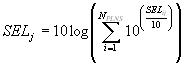 [Equation 2]
where SELij is the SEL in the jth frequency band for the ith non-deleted data block.
| G) | The raw, 1-hour Leq in the jth frequency band is given in terms of the corresponding SELj by: | ||
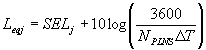 [Equation 3]
Where T is the block duration in seconds, NPLNS Is the number of non-discarded data blocks, and 3600 is the number of seconds in an hour.
| 2) | Continuous Data Collection. | ||
| A) | The measuring instrument | ||
| B) | A switch on the measuring instrument | ||
| C) | Data collection | ||
 [Equation 4]
Where Leqij is the Leq in the jth frequency band for the ith large block. Ti is the actual number of seconds of “good”data accumulated in the ith blockof time (e.g., 6 to 15 minutes); and
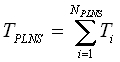 [Equation 5]
| 3) | Minimum data collection requirements: | ||
| A) | Initial Measurement Duration. The property-line-noise-source measurements | ||
| i) | If small blocks of data are used for data collection, then the total measurement duration in seconds, TPLNS is given by NPLNS T, where T is the length of each block in seconds and NPLNS is the number of non-discarded blocks. If data inhibition is used for data collection, then TPLNS is the number of non-inhibited seconds during the measurement hour. In either case, TPLNS shall be no less than 900 seconds. |
| ii) | If very few blocks were used for data collection, then the duration of each block, T, may be too long and should be reduced. |
| iii) | For either data collection method, sounds considered to be short-term transient may actually be part of the long-term background ambient and should be so redefined. | ||
| B) | Extended Measurement Duration. If TPLNS is less than 900 seconds during the first hour of measurements, the raw data collection procedures shall be appropriately modified and new measurements | ||
| 4) | Correction for Long-Term Background Ambient Sound: | ||
| A) | The raw, 1-hour Leq | ||
| i. | If the difference between the raw1-hour Leq and the long-term background ambient sound is larger than 10 decibels, then the correction shall be set to 0. | ||
| ii. | If the difference between the raw 1-hour Leq and the long-term background ambient sound difference is less than 3 decibels, then the jth frequency-band level, Leqj, shall be set equal to 0. | ||
| iii. | If the difference between the raw 1-hour Leq and the long-term background ambient sound is between 3 and 10 decibels then the correction given in Table 1 below shall be subtracted from the raw, 1-hour property-line-noise-source Leqj | ||
Table 1
Corrections in dB for long-term
Background ambient sound
Difference |
Correction |
|
(dB) |
(dB) |
|
3 |
3 |
|
4 |
2.3 |
|
5 |
1.7 |
|
6 |
1.3 |
|
7 |
1.0 |
|
8 |
0.7 |
|
9 |
0.6 |
|
10 |
0.5 |
| B) | The long-term background ambient corrected level | ||
| b) | Obtaining the background ambient sound level: | ||
| 1) | The background ambient | ||
| 2) | Long-term background ambient measurement procedures are similar to procedures to measure the property-line-noise-source itself. Eliminating short-term background ambient transient sounds from the measurement of average long-term background ambient sound proceeds in a manner similar to the measurement of the property-line-noise-source emissions themselves. The two methods for measurement are: (1) to divide the 10-minute measurement into short blocks of data, or (2) inhibit data collection when short-term background transient sounds occur. The same method | ||
| 3) | Using small blocks of data | ||
| A) | The 10-minute measurement of long-term background ambient | ||
| B) | All data for any measurement block corrupted by one or more short-term ambient transient sounds | ||
| C) | The Leq for each octave (or 1/3 – octave) band are (energy) averaged over the NBA remaining measurement blocks to obtain average long-term background ambient Leq per band. Equation 1 (see subsection (a) (1) (E) above) is used for this calculation with NBA replacing NPLNS as the number of elemental blocks to be summed. The total duration of the measurement in seconds, TBA, is given by NBA multiplied by T. | ||
| 4) | Continuous Data Collection. | ||
| A) | The measuring instrument | ||
| B) | The switches or buttons | ||
| C) | Data collection | ||
| D) | TBA is the number of non-inhibited measurement seconds during the 10-minute measurement period. | ||
| 5) | The minimum duration, for either method, TBA | ||
| 6) | Measurement Alternatives. The long-term background ambient-noise should ideally be measured at the potential violation site just before measurement of the property-line-noise-source emissions. However, turning off the property-line-noise-source may not always be possible. The following are a hierarchical order of five procedures for obtaining the long-term background ambient noise. The first four procedures involves direct measurement; the fifth procedure provides for use of tables of values obtained from extensive measurements. These are not equivalent procedures but are ordered from what | ||
| A) | Direct Measurement Procedure –1: With the property-line-noise-source (PLNS) turned off measure the long-term background ambient noise within the hour before or within the hour after measurement of the PLNS emissions at the location where the PLNS measurements are being taken and with the measurement equipment used for the PLNS measurements. | ||
| B) | Direct Measurement Procedure-2: With the PLNS turned off, measure the long-term background ambient during a similar time period in terms of background ambient sound level, within one (1) to twenty-four (24) hours before, or within one (1) to twenty four (24) hours after measurement of the PLNS emissions at the location where the PLNS measurements are being taken and with the measurement equipment used for the PLNS. | ||
| C) | Direct Measurement Procedure- 3: With the PLNS turned off, measure the long-term background ambient during some other acoustically similar period within one (1) to thirty (30) days before, or within one (1) to thirty (30) days after measurement of the PLNS emissions. This alternate long-term background ambient measurement time might be a Saturday night or anytime during a Sunday or holiday. The measurements would be made at the location where the PLNS measurements are being taken and with the measurement equipment (or like equipment) used for the PLNS measurement. | ||
| D) | Direct Measurement Procedure-4: With the PLNS turned off, measure the long-term background ambient noise during some other acoustically similar period within thirty (30) to ninety (90) days before, or within thirty (30) to ninety (90) days after measurement of the PLNS emissions. These measurements would be made at the location where the PLNS measurements are being taken and with the measurement equipment (or like equipment) used for the property-line-noise-source measurements. | ||
| E) | Tables of long-term background Ambient Noise. Where none of the alternatives can be used, use the applicable long-term background ambient data taken from Tables 2 through 5. These tables are organized by predominant land use and time of day (daytime or nighttime). There are separate tables for octave and 1/3- octave bands. The background environments presented in the table are based on extensive measurements conducted in the Chicago area and are divided into the five categories given below in accordance with Bonvallet, G.L., “Levels and Spectra of Traffic of Traffic, Industrial, and Residential Area Noise,” Jornal of the Acoustical Society of America, 23 (4), pp 435-439, July, 1951; and Dwight E. Bishop and Paul D. Schomer, Handbook of Acoustical Measurements and Noise Control, Chapter 50, community Noise Measurements, 3rd Edition, Cyril M Harris, Editor , McGraw-Hill Book Co., New York (1991). | ||
| i) | Category 1: Noisy commercial and Industrial Areas. Very heavy traffic conditions such as (a) in busy downtown commercial areas, (b) at intersections of mass transportation and other vehicles including L trains, heavy motor trucks and other heavy traffic, and (c) street corners where many motor vehicles, buses and heavy trucks accelerate. | ||
| ii) | Category 2: Moderate Commercial and Industrial Areas, and Noisy Residential Areas. Heavy traffic areas with (a) conditions similar to (1) above but with somewhat less traffic, (b) routes of relatively heavy or fast automobile traffic but where heavy truck traffic is not extremely dense, and (c) motor bus routes. | ||
| iii) | Category 3: Quiet Commercial and Industrial Areas, and Moderate Residential Areas. Light traffic conditions where no mass transportation vehicles and relatively few automobiles and trucks pass, and where these vehicles generally | ||
| iv) | Category 4: Quiet Residential Areas. These areas are similar to Category 3 above but for this group the background is either | ||
| v) | Category 5: Very Quiet, Sparse Suburban or Rural Areas. These areas are similar to Category 4 above but are usually in unincorporated areas and for this group there are few if any near neighbors. | ||
Table 2. Daytime long-term background ambient Leq levels by land use categories and 1/3 octave-band level.
Background Category |
Band Center H% |
1 |
2 |
3 |
4 |
5 |
20 |
63 |
56 |
48 |
42 |
36 |
25 |
64 |
57 |
49 |
43 |
37 |
31 |
65 |
58 |
50 |
44 |
38 |
40 |
65 |
58 |
51 |
44 |
38 |
50 |
66 |
59 |
51 |
45 |
39 |
63 |
66 |
59 |
52 |
46 |
40 |
80 |
67 |
60 |
52 |
46 |
40 |
100 |
68 |
60 |
53 |
47 |
41 |
125 |
67 |
59 |
52 |
46 |
40 |
160 |
66 |
59 |
52 |
46 |
40 |
200 |
66 |
58 |
51 |
45 |
39 |
250 |
65 |
58 |
50 |
44 |
38 |
315 |
64 |
57 |
49 |
43 |
37 |
400 |
63 |
55 |
48 |
42 |
36 |
500 |
62 |
54 |
46 |
40 |
34 |
630 |
61 |
53 |
44 |
38 |
32 |
800 |
60 |
51 |
42 |
36 |
30 |
1000 |
58 |
49 |
40 |
34 |
28 |
1250 |
56 |
47 |
38 |
32 |
26 |
1600 |
54 |
45 |
36 |
30 |
24 |
2000 |
52 |
43 |
33 |
28 |
21 |
2500 |
50 |
41 |
30 |
25 |
19 |
3150 |
49 |
39 |
28 |
23 |
17 |
4000 |
48 |
37 |
25 |
20 |
15 |
5000 |
46 |
35 |
23 |
18 |
13 |
6300 |
44 |
33 |
21 |
16 |
10 |
8000 |
43 |
31 |
19 |
14 |
8 |
10,000 |
41 |
29 |
17 |
12 |
6 |
12,500 |
39 |
27 |
15 |
10 |
4 |
Table 3. Nighttime long-term background ambient Leq levels by land use categories and 1/3- octave band level.
Background Category |
Band Center H% |
1 |
2 |
3 |
4 |
5 |
20 |
53 |
48 |
43 |
37 |
31 |
25 |
54 |
49 |
44 |
38 |
32 |
31 |
55 |
50 |
45 |
39 |
33 |
40 |
55 |
50 |
46 |
39 |
33 |
50 |
56 |
51 |
46 |
40 |
34 |
63 |
56 |
51 |
47 |
41 |
35 |
80 |
57 |
52 |
47 |
41 |
35 |
100 |
58 |
52 |
48 |
42 |
36 |
125 |
57 |
51 |
47 |
41 |
35 |
160 |
56 |
51 |
47 |
41 |
35 |
200 |
56 |
50 |
46 |
40 |
34 |
250 |
55 |
50 |
45 |
39 |
33 |
315 |
54 |
49 |
44 |
38 |
32 |
400 |
53 |
47 |
43 |
37 |
31 |
500 |
52 |
46 |
41 |
35 |
29 |
630 |
51 |
45 |
39 |
33 |
27 |
800 |
50 |
43 |
37 |
31 |
25 |
1000 |
48 |
41 |
35 |
29 |
23 |
1250 |
46 |
39 |
33 |
27 |
21 |
1600 |
44 |
37 |
31 |
25 |
19 |
2000 |
42 |
35 |
28 |
23 |
16 |
2500 |
40 |
33 |
25 |
20 |
14 |
3150 |
39 |
31 |
23 |
18 |
12 |
4000 |
38 |
29 |
20 |
15 |
10 |
5000 |
36 |
27 |
18 |
13 |
8 |
6300 |
34 |
25 |
16 |
11 |
5 |
8000 |
33 |
23 |
14 |
9 |
3 |
10,000 |
31 |
21 |
12 |
7 |
1 |
12,500 |
29 |
19 |
10 |
2 |
|
Table 4. Daytime long-term background ambient Leq levels by land use categories and octave band level.
Background Category |
Band Center H% |
1 |
2 |
3 |
4 |
5 |
31 |
70 |
63 |
55 |
49 |
43 |
63 |
71 |
64 |
57 |
51 |
45 |
125 |
72 |
64 |
57 |
51 |
45 |
250 |
70 |
63 |
55 |
49 |
43 |
500 |
67 |
59 |
51 |
45 |
39 |
1000 |
63 |
54 |
45 |
39 |
33 |
2000 |
57 |
48 |
38 |
33 |
26 |
4000 |
53 |
42 |
30 |
25 |
20 |
8000 |
48 |
36 |
24 |
19 |
13 |
Table 5. Nighttime long-term background ambient Leq levels by land use categories and octave band level.
Background Category |
Band Center H% |
1 |
2 |
3 |
4 |
5 |
31 |
60 |
55 |
50 |
44 |
38 |
63 |
61 |
56 |
52 |
46 |
40 |
125 |
62 |
56 |
52 |
46 |
40 |
250 |
60 |
55 |
50 |
44 |
38 |
500 |
57 |
51 |
46 |
40 |
34 |
1000 |
53 |
46 |
40 |
34 |
28 |
2000 |
47 |
40 |
33 |
28 |
21 |
4000 |
43 |
34 |
25 |
20 |
15 |
8000 |
38 |
28 |
19 |
14 |
8 |
APPENDIX F
OLD RULE NUMBERS REFERENCED
The following table is provided to aid in referencing old Agency rule numbers to section numbers pursuant to codification.
Old |
Ill. Adm. Code Part 910 |
Part 1.0 |
Section 910.100 |
Part 2.0 |
Section 910.101 |
Part 3.0 |
Section 910.102 |
Part 4.0 |
Section 910.103 |
Part 5.0 |
Section 910.104 |
Part 6.0 |
Section 910.105 |
Figure 1 |
Appendix A |
Figure 2 |
Appendix B |
Figure 3 |
Appendix C |
Figure 4 |
Appendix D |
Figure 5 |
Appendix E |
Section 910.107 Measurement Techniques for Highly-Impulsive Sound Under 35 Ill. Adm.
| Code 901.104. | |
| a) | Measurement of highly-impulsive sound under Rule 901.104 can be made in two distinct and equally valid ways, namely the general method and the controlled test method. | ||
| b) | General Method: The general method is to measure the 1-hour, A–weighted Leq (not the octave or 1/3 octave band levels) using essentially one of the two procedures described in 35 Ill. Adm. Code 910.105 and 910.106. | ||
| 1) | The procedure using small blocks of time to collect data is as follows: | ||
| A) | The hour must be divided into small blocks and the A-weighted Leq must be measured for each of these small blocks of time. Leq must be measured for the entire hour but data collection must be inhibited whenever a short-term background transient sound occurs. | ||
| C) | The duration of each block must be held constant during the hour. This duration in seconds must divide exactly into 900 and must be neither greater than 100 seconds nor less than 10 seconds. | ||
| E) | The data for any block corrupted by one or more short-term background ambient sounds must be discarded. | ||
| 2) | The continuous data collection procedures is as follows: | ||
| A) | Leq must be measured for the entire hour. | ||
| B) | Data collection must be inhibited whenever a short-term background transient sound occurs. | ||
| 3) | Correction for the Long-Term Background Ambient must be accomplished using all of the other procedures and requirements enumerated in 35 Ill. Adm. Code 910.105 and 910.106 must be complied with | ||
| c) | Controlled Test Method: For this method, the following procedures must be used: | ||
| 1) | General Measurement Description | ||
| A) | The sound exposure per impulse from each separate individual impulsive source is measured. | ||
| B) | The total sound exposure per hour from each source is the sound exposure per event multiplied by the number of events per hour. | ||
| C) | The grand total sound exposure (SE) per hours is the sum of the sound exposures per hour from each of the separate individual sources. | ||
| D) | The reported SEL is obtained from the grand total sound exposure (SE) per hour using the following: | ||
| SEL = 10 log (SE) + 94. | [Eq. 7] |
| E) | The equivalent level, Leq corresponding to a SEL measured or predicted for one hour (3600 seconds) is given by: | ||
| Leq = SEL - 10 log (3600). | [Eq. 8] |
| 2) | Determination of Sound Exposure per Event must be as follows: | ||
| A) | The sound exposure per event from each, separate, individual source must be determined by measuring the total A-weighted sound exposure for about 10 repetitions of this source. This set of about 10 measurements may be performed continuously over a short period of time, or this set of measurements may be performed over a discontinuous set of measurement periods. In either case, the total measurement duration must be less than 100 seconds. | ||
| B) | These separate, individual property-line-noise-source controlled measurement must be free of any short-term ambient sounds. If any short-term background transient sounds occur during these measurements, then the measurement must be repeated until measurement data, free of any corrupting short-term background ambient sounds are obtained. | ||
| C) | The total measured A-weighted sound exposure for this group of about 10 repetitions must be corrected for long-term background ambient by subtracting the A-weighted long-term background ambient sound exposure. The sound exposure value subtracted must be the long-term A-weighted background ambient sound exposure per second multiplied by the number of seconds used to measure the several source repetitions. | ||
| D) | The reported source A-weight sound exposure per event must be the total corrected sound exposure divided by the number of source repetitions measured. | ||
| E) | The background ambient must be measured for a short time, at least 30 seconds as near in time to the source measurements as possible, but within ½ hour. The total A-weighted long-term background ambient sound exposure per second is the total measured long-term background ambient sound exposure divided by the number of seconds of background ambient measurement. | ||
| F) | There must be no short-term background ambient sounds present during the measurement of the long-term background ambient. If any short-term background transient sounds occur during these measurements, then the measurements must be repeated until long-term background ambient measurement data free of any corrupting short-term background ambient sound are obtained. | ||
| IT IS SO ORDERED. | |||||||||||
I, Dorothy M. Gunn, Clerk of the Illinois Pollution Control Board, certify that the Board adopted the above order on February 20, 2003, by a vote of 7-0.
| Dorothy M. Gunn, Clerk | |||||||||||
| Illinois Pollution Control Board | |||||||||||